 blog
Compare Car Insurance Quotes Online in Florida
Table of Contents
- Why Comparing Car Insurance Quotes Online Pays Off in Florida
- How to Compare Car Insurance Quotes the Right Way
- Car Insurance Comparison Tools: What They Do and Don't Show You
- Florida Car Insurance Coverage Options You Need to Match
- Your Car Insurance Quote Checklist Before You Commit
- Where Online Quotes Fall Short for High-Risk Drivers
- When to Stop Comparing and Lock In Coverage
- Frequently Asked Questions
Last Updated: October 21, 2026
Why Comparing Car Insurance Quotes Online Pays Off in Florida
Florida drivers face a market unlike any other. According to the Insurance Information Institute's auto insurance facts and statistics, Florida consistently ranks among the most expensive states for car insurance, driven by litigation costs, storm damage claims, and a high concentration of uninsured drivers. That makes the habit of comparing car insurance quotes online in Florida less of a nice-to-have and more of a financial necessity. (Source: Insurance Information Institute's auto insurance facts and statistics)
At MK Insurance Services, we work with drivers every week who are paying far more than they should simply because they never shopped around. The only way to find the best rates is to compare.
Below, we'll show you exactly how to compare car insurance quotes online in Florida the right way, which coverage options actually matter, and when to stop shopping and lock in a policy.
How to Compare Car Insurance Quotes the Right Way
The right way to compare car insurance quotes is to gather quotes from at least three carriers using identical coverage limits, deductibles, and driver details so the comparison is apples-to-apples. Most drivers skip this step and end up comparing wildly different policies.
Here is the process we walk clients through:
- Write down your current coverage limits before you start. You need the same bodily injury, property damage, PIP, and uninsured motorist limits on every quote.
- Standardize your deductibles. A quote with a higher deductible will always look cheaper. Hold it constant.
- List every driver in the household, including teenagers, and every vehicle.
- Disclose your full driving history, including tickets and at-fault accidents. Hiding them produces a quote that will change at binding.
- Request quotes in writing and save each one for side-by-side review.
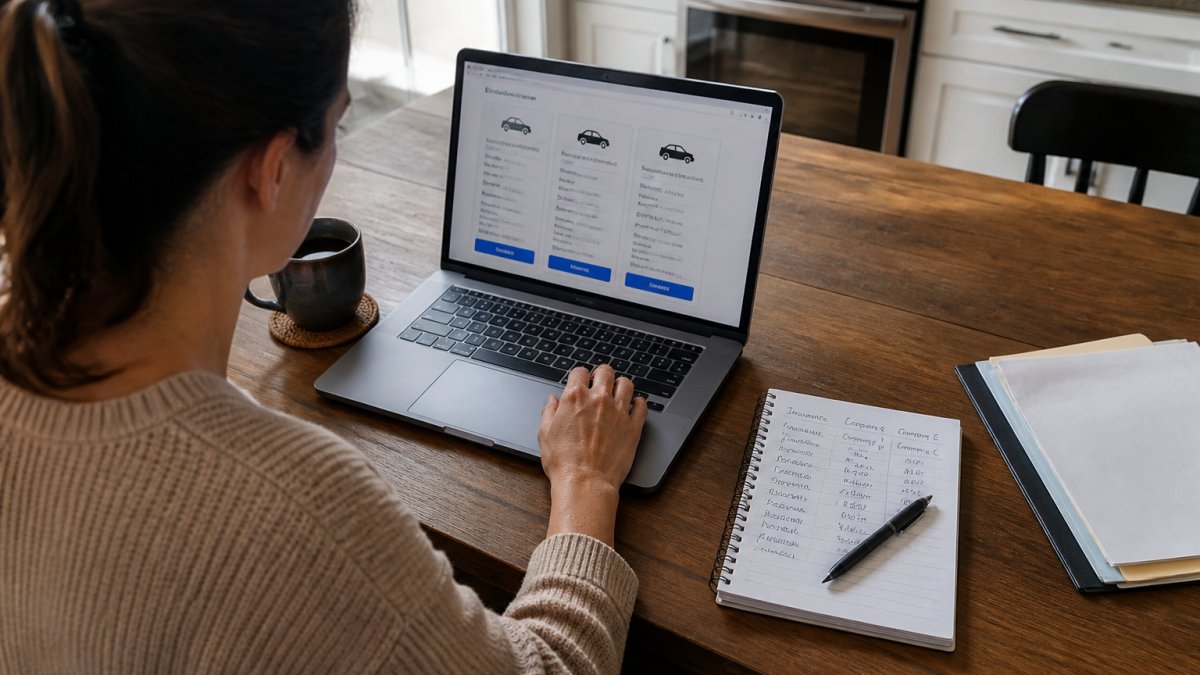
A common mistake is comparing a quote with full uninsured motorist coverage against one without it. The cheaper policy usually strips out the coverage that protects you when the other driver has no insurance, which happens often in Florida.
Car Insurance Comparison Tools: What They Do and Don't Show You
Car insurance comparison tools are websites that collect your information and return estimated rates from multiple carriers. They are a useful starting point, but they are not the whole picture.
What these tools typically do well:
- Give you a fast sense of the rate range for your profile
- Surface carriers you may not have heard of
- Let you compare basic liability pricing quickly
What they often leave out:
- Final pricing, which can shift after underwriting review
- Carrier-specific discounts you qualify for
- Whether a carrier will accept a driver with an SR-22 or FR-44 requirement
- Coverage details buried in the policy language
Florida Car Insurance Coverage Options You Need to Match
Florida car insurance coverage options fall into two groups: what the state requires and what genuinely protects your finances. Matching coverage across quotes means comparing the same items, not just the same total price.
The state-required pieces include Personal Injury Protection (PIP) and Property Damage Liability (PDL). The Florida Department of Highway Safety and Motor Vehicles publishes the current minimum requirements and proof-of-insurance rules, and those figures change, so verify them at the source before you shop.
Beyond the minimums, most Florida drivers should compare quotes that include:
- Bodily Injury Liability (BI): Not required for all drivers, but skipping it leaves you personally exposed after a serious crash.
- Uninsured/Underinsured Motorist (UM/UIM): Protects you when the at-fault driver can't pay.
- Collision and Comprehensive: Essential if you have a loan or lease, and worth pricing even if you don't.
- Medical Payments (MedPay): Fills gaps PIP doesn't cover.
| Coverage Type | Required in Florida | What It Protects |
|---|---|---|
| Personal Injury Protection | Yes | Your medical bills, regardless of fault |
| Property Damage Liability | Yes | Damage you cause to others' property |
| Bodily Injury Liability | Situational | Injuries you cause to others |
| Uninsured Motorist | Optional | You, when the other driver can't pay |
| Collision/Comprehensive | Optional | Your own vehicle |
Your Car Insurance Quote Checklist Before You Commit
Before you commit to any policy, run through a fixed checklist so nothing slips past you. We use this one with every client.
- Coverage limits match across every quote you compared
- Deductibles are identical, not just similar
- All household drivers and vehicles are listed
- Driving history is fully disclosed, including recent tickets
- Discounts are applied and named in writing
- The carrier is licensed to write policies in Florida
- You understand what happens at renewal if your record changes
- Payment terms and effective date are confirmed
Where Online Quotes Fall Short for High-Risk Drivers
Online quotes fall short for high-risk drivers because most quoting engines are built for clean records. Drivers with at-fault accidents, lapses in coverage, DUI history, or an SR-22 or FR-44 filing requirement often get error messages or inflated placeholder rates instead of real numbers.
That is the honest limitation of self-service comparison. The carriers most likely to accept a high-risk profile are frequently the ones that don't appear in a generic online quote form. They want a conversation, and they want an agent who knows which of them will write the risk.
This is where an independent agency earns its keep. MK Insurance Services works with more than 40 A-rated carriers, which means we can route a difficult profile to the carriers most likely to say yes, and handle the SR-22 or FR-44 filing details so you are not left guessing at the process. Our quotes are free and carry no obligation.
When to Stop Comparing and Lock In Coverage
Stop comparing when you have three to five written quotes with identical coverage, and one of them clearly fits your budget without stripping out protection you need. More shopping past that point usually produces diminishing returns and delays your coverage.
Signs it's time to commit:
- You've compared the same coverage limits across multiple carriers
- You understand the trade-offs between the cheapest and the most complete option
- You've confirmed the effective date and payment method
- You've verified the carrier is licensed in Florida
If you need coverage today, waiting a week to save a few dollars a month is usually the wrong trade. Gaps in coverage cost more than the difference between quotes.
Comparing car insurance quotes online in Florida is a smart first step, but the process gets complicated fast when your driving record isn't clean or you need a state filing handled correctly. That's the moment to bring in a licensed independent agent who can compare real options across 40+ A-rated carriers, handle SR-22 and FR-44 requirements, and get you covered the same day payment clears. Get a free, no-obligation quote from MK Insurance Services and stop guessing which policy actually protects you.
Frequently Asked Questions
How do I compare car insurance quotes online?
Enter the same driver details, vehicle information, and coverage limits on every site so the numbers are actually comparable. A quote with state-minimum limits will always look cheaper than one with full coverage, so match the coverage first, then compare price. Pull at least three quotes, check the deductible and exclusions on each, and confirm the effective date before you pay. If a quote looks unusually low, ask what it leaves out.
What information do I need to get car insurance quotes?
Have your driver's license number, the vehicle identification number, current mileage, and your address ready. If you have existing coverage, keep the declarations page nearby so you can copy your limits and deductibles exactly. Drivers with an SR-22 or FR-44 requirement should mention it upfront, because not every carrier files those forms. Missing details get filled in with defaults, and defaults can change your rate significantly.
Can I compare car insurance quotes without affecting my credit?
Yes. Requesting your own quotes is a soft inquiry and does not lower your credit score. Insurers in Florida may use credit-based insurance scores when setting rates, but shopping around is not the same as applying for credit. The hard inquiry only happens if you formally apply and bind a policy, and even then the effect is limited to that single application.
Is the cheapest car insurance quote the best option?
Rarely. The lowest quote usually carries higher deductibles, lower liability limits, or excludes optional coverage you may need. Compare total out-of-pocket exposure, not just the monthly premium. Check the carrier's complaint record, confirm it is licensed to write in Florida, and read the exclusions. A mid-priced policy with solid limits often costs less overall after one claim than a bargain policy with gaps.